Back
Back
22 July 2026
The International Testing Agency (ITA) delivered a comprehensive clean sport education program during the Muaythai World School Championships and the 2026 IFMA World Muaythai Championships in Kuala Lumpur, Malaysia, in partnership with the International Federation of Muaythai Associations (IFMA), the International School Sport Federation (ISF) and the Anti-Doping Agency of Malaysia (ADAMAS).
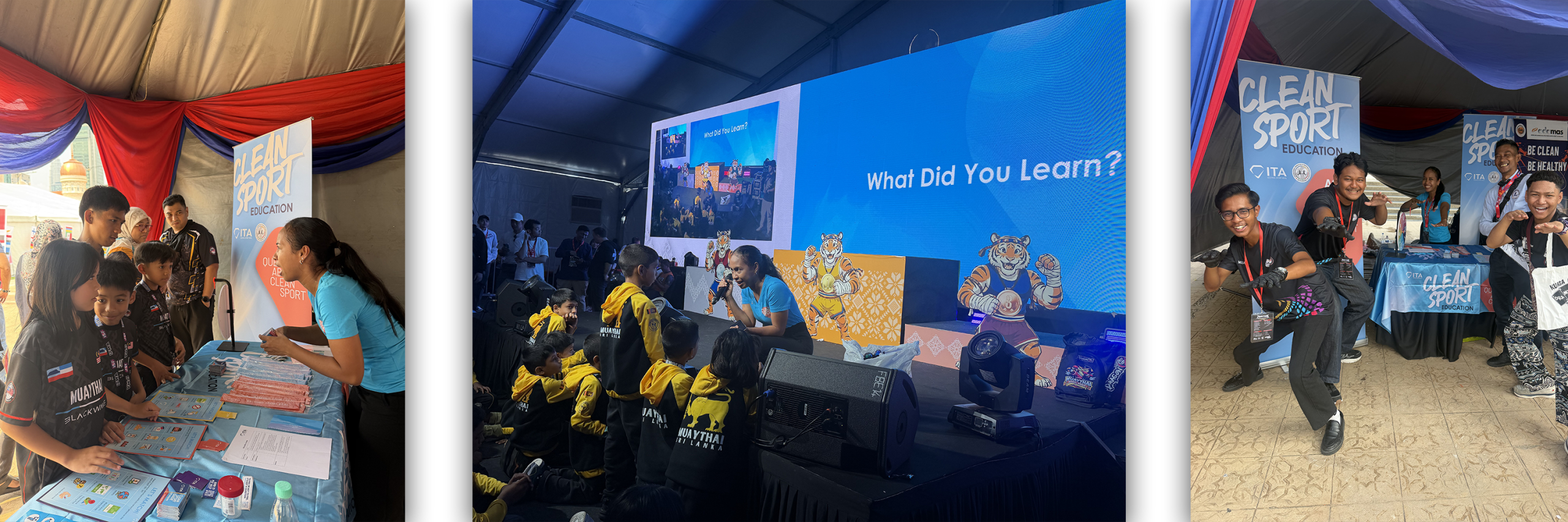
Over five days, the ITA welcomed athletes, coaches, athlete support personnel and families to its Clean Sport Education Booth, providing practical guidance on anti-doping topics through interactive activities and one-to-one conversations.
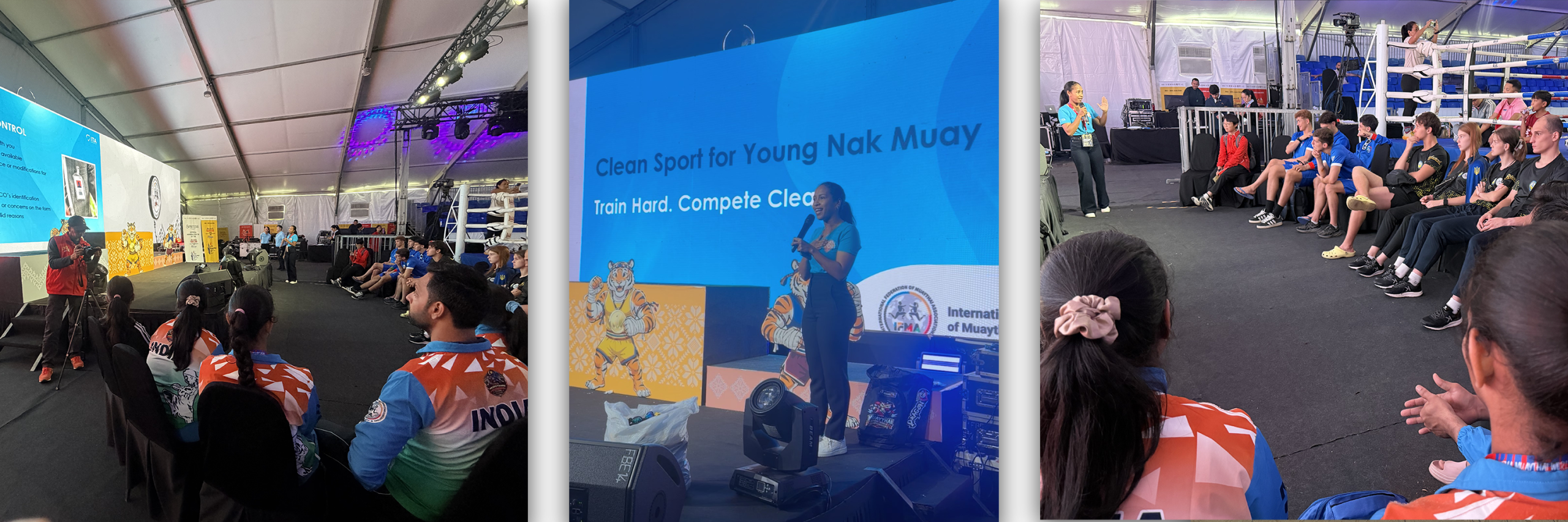
Alongside the education booth, the ITA delivered three tailored education sessions: one for participants at the Muaythai World School Championships, one for coaches attending the 2026 IFMA World Muaythai Championships and one for athletes competing at the championships.
Throughout the event, the education booth attracted a steady flow of visitors eager to learn more about clean sport. Athletes, coaches and athlete support personnel asked questions covering strict liability, anti-doping rule violations, the doping control process, medications, supplements, the Prohibited List and Therapeutic Use Exemptions (TUEs).
The sessions and discussions helped participants better understand that anti-doping extends far beyond testing alone. As one athlete from Thailand reflected: “I thought doping was only about testing positive, but now I understand it is much more than that.” Another athlete from India highlighted one of the key principles of clean sport by saying: “Now I understand I am fully responsible for everything I take, even if someone else gives it to me.” Similarly, an athlete from the United Arab Emirates shared how the session had changed their perspective: “I used to trust everything I was given, but now I know I must always check first.”
The booth’s interactive games proved especially popular with younger athletes, many of whom returned several times after attending the presentations. Their repeated visits demonstrated growing confidence and understanding of key anti-doping concepts while giving the ITA Education team opportunities to reinforce important messages in an engaging way.
Many athletes also shared their own experiences of doping control, leading to valuable discussions and helping to address common misconceptions. One athlete from Hungary explained that although they are only 19 years old, they are often wrongly accused of using steroids because of their appearance, adding that they would welcome being tested to prove they are a clean athlete. Stories like these highlighted the importance of education in building trust and understanding around anti-doping.
The program also resonated strongly with coaches. An Indian coach described the session as “very helpful” and emphasised that it is essential for both athletes and coaches to understand clean sport. A coach from Malaysia praised the practical approach, noting that the real-life examples made the anti-doping rules easier for athletes to understand, while a coach from China commented that this type of education “should be done at every championship.”
Families also played an active role throughout the event. Parents and siblings accompanying the younger athletes showed genuine interest in anti-doping and asked how they could support young athletes in making informed decisions and competing clean.
The ITA also collaborated closely with the Anti-Doping Agency of Malaysia (ADAMAS), whose local educators co-delivered the presentation for school athletes and supported the education booth throughout the championships. Their local expertise and ability to engage with Malaysian participants in their native language significantly enhanced the educational experience.
The ITA thanks IFMA, ISF and ADAMAS for their continued collaboration in promoting clean sport and empowering the next generation of athletes with the knowledge and confidence to compete clean.