 Back
Back
16 September 2026
Anti-doping samples often need to safely reach a WADA-accredited laboratory within demanding timelines. This can create significant logistical challenges during major sporting events, particularly where venues and laboratories are separated by long distances or where road transport is affected by congestion. Similar challenges can arise in mountainous regions, remote locations or areas with limited transport infrastructure. Drone delivery could provide an additional option when conventional transport is slower, less predictable or difficult to organise, including at major events such as the Olympic Games where timely sample delivery is critical to efficient anti-doping operations and the integrity of the Games. In certain circumstances, sample transportation via drone can provide a more cost-effective and environmentally friendly option compared to traditional courier services.
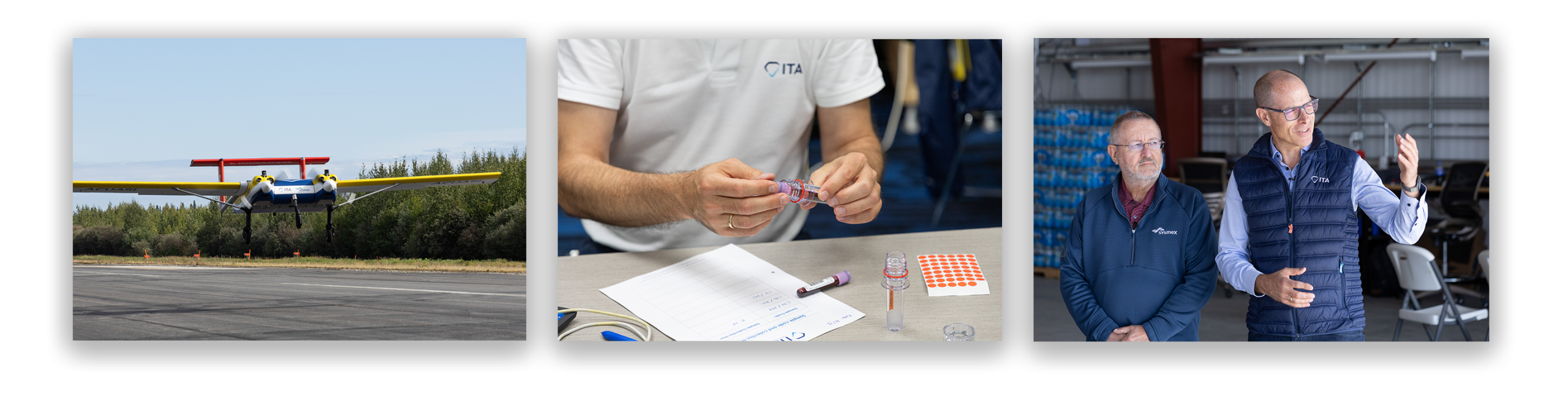
The autonomous heavy-lift aircraft, produced by Windracers, completed a 1,000 km flight on 19 August 2026 over several hours, operating from Nenana Municipal Airport in the interior of Alaska. ACUASI provided operational and technical support for the test flight, including flight planning and execution, drawing on its expertise in long-range unmanned aircraft operations. The demanding Alaskan setting provided a distinctive environment in which to assess the operational feasibility of transporting sensitive biological samples over long distances.
“Innovation is essential to addressing practical challenges in anti-doping, but it must always be underpinned by robust science and the highest standards of sample integrity and chain of custody,” said Benjamin Cohen, ITA Director General. “Through this research, we are assessing whether drone technology can become a reliable additional option for transporting samples over long distances or across difficult terrain. The findings may also have applications beyond anti-doping, particularly in helping remote communities access laboratory and medical services more quickly and efficiently.”
For the study, anonymised blood samples from healthy subjects underwent initial analysis and then were divided into two groups: one was transported onboard the drone, while the other remained on the ground as a control group. Sensors accompanied the samples throughout the flight to record temperature, atmospheric pressure, humidity, vibrations, and acceleration. These measurements will help researchers assess the conditions experienced by the samples and determine whether they affect the relevant blood biomarkers. Following the flight, the transported samples and control samples were analysed again in the same temporary, purpose-built satellite laboratory installed inside a hangar at Nenana Municipal Airport. The laboratory was equipped by Sysmex with automated haematology analysis technology and was operated by the director of the WADA-accredited laboratory in Dresden, Germany, ensuring that WADA’s documentations for blood sample analysis were rigorously followed. This ad-hoc setup allowed both groups of samples to be analysed promptly, under the same conditions and using the same equipment in the same location. Sysmex also enabled the long-distance test flight through a financial contribution to the project.
The Alaska test builds on the ITA’s first study into drone transport, conducted in Doha in 2022 in collaboration with the Anti-Doping Laboratory Qatar and Swiss drone specialist RigiTech, and is part of the ITA’s wider research into drone enabled sample transport brought together under the project name “Integrity in Flight”. During the initial trial in Doha, urine, blood and Dried Blood Spot samples were transported on multiple drone flights covering distances of up to approximately 20 kilometres. The study demonstrated the operational potential of drones for short-distance transport, while post-flight analysis indicated that relevant blood biomarkers had not been adversely affected. The Alaska study represents the next stage, extending the research to a substantially longer journey and a more complex operational setting.
The research is not intended to replace established transportation arrangements. Its purpose is to establish whether autonomous aircraft could become a reliable additional tool for specific operational situations, subject to scientific validation, aviation requirements, chain-of-custody procedures, sample-security protocols and applicable anti-doping rules.
WADA Senior Director, Science and Medicine, Prof. Olivier Rabin, said: “Testing athletes’ samples remains a central pillar of the global anti-doping system, and it is an important way to deter those who might otherwise contemplate breaking the rules, as well as catching those who do. However, transporting samples to WADA-accredited laboratories for analysis can be an expensive and logistically difficult process for Anti-Doping Organizations to ensure full integrity of the samples during the transportation phase, especially from remote or difficult to access areas to the laboratories. Modern technologies have the potential to successfully alleviate some of the challenges while not compromising quality. They must of course be robustly tested to ensure they are fully reliable and fit-for-purpose in the anti-doping context. WADA commends the ITA and its partners for seeking to innovate in this way. “The ITA will compare the results recorded before and after the flight to determine whether the journey had any discernible impact on white and red blood cell populations and indices relevant to the Athlete Biological Passport.
Should the study confirm that blood-sample integrity can be maintained during extended drone flights, the findings could support new transport options for anti-doping organisations and major event organisers. “Sysmex is proud to support this research, but what excites us most is what it signals beyond sport. The same technology that can move a blood sample across 1,000 kilometres of Alaskan wilderness could one day bring timely diagnostics to patients in the world’s most remote communities,” said Andy Hay, Chairman of the Board of Directors, Sysmex America Inc. Long-distance drone transport may help connect remote communities with medical laboratories in regions where local analytical capacity or reliable transport infrastructure is limited.
The ITA intends to submit the findings for publication in a peer-reviewed scientific journal. This will allow the evidence to be independently assessed and potentially used by other organisations working in anti-doping, laboratory medicine and healthcare. The results of the scientific analysis will be communicated once the evaluation has been completed.


