 Back
Back
1 April 2026
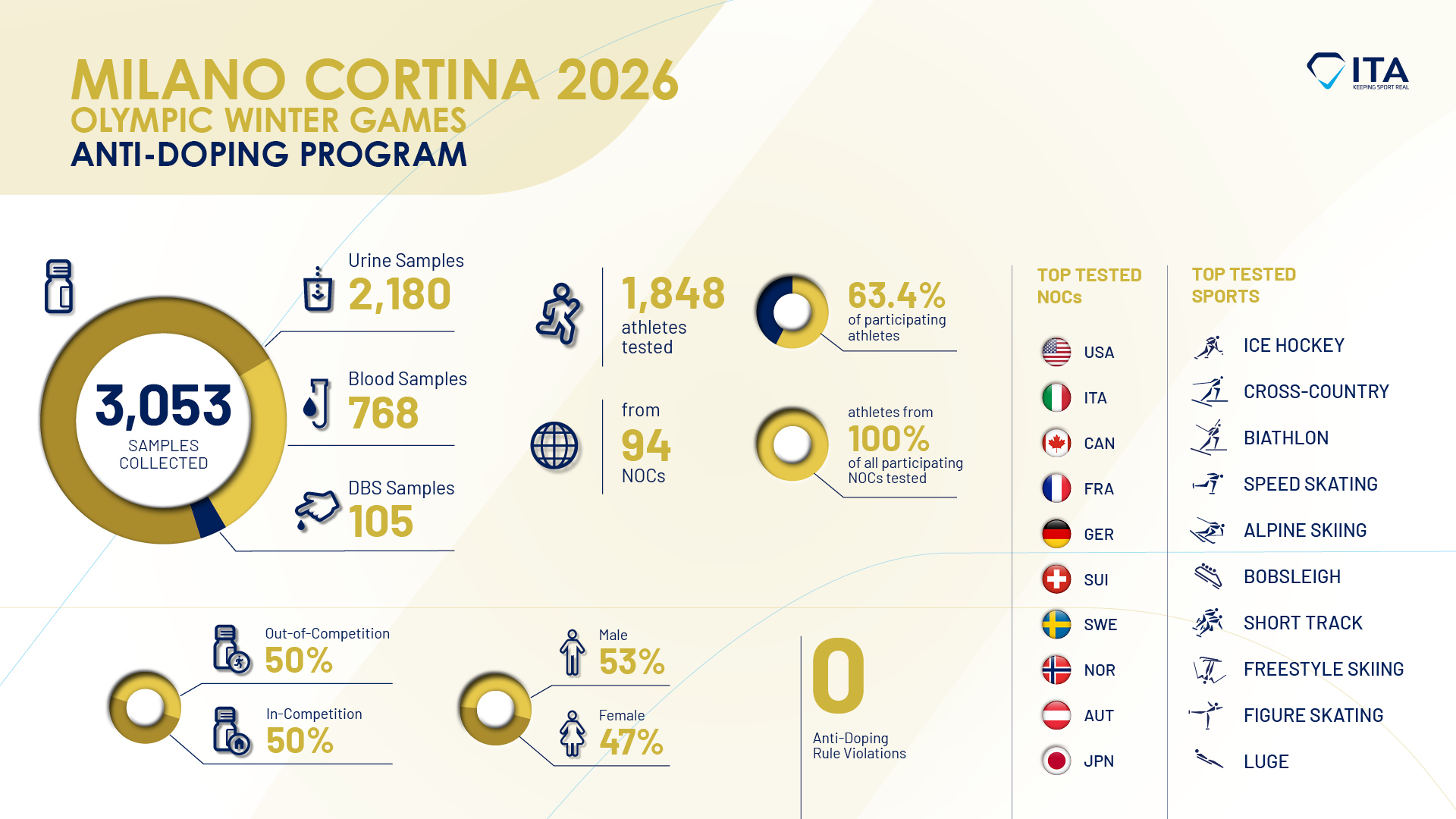
The ITA reports the final figures of the Games-time phase of its anti-doping activities for the Olympic Winter Games Milano Cortina 2026. Altogether, 3,053 samples were collected both in- and out-of-competition from the opening of the Olympic Villages on 30 January to the Closing Ceremony on 22 February. These samples, comprising 2,180 urine samples, 768 blood samples and 105 Dried Blood Spot (DBS) samples, stemmed from doping controls conducted on 1,848 athletes, representing 63.4% of all participants, a clear increase compared to the 55% of athletes tested during the Olympic Winter Games Beijing 2022.
Doping controls were implemented on athletes from all participating NOCs, ensuring comprehensive coverage during the Games. The distribution of tests broadly reflected the size of national delegations, with the United States, Italy, Canada, France and Germany among the most frequently tested nations. Among the winter sports, ice hockey, cross-country skiing, biathlon, speed skating and alpine skiing saw the highest number of doping controls. Overall, the testing program maintained an even distribution between in-competition and out-of-competition testing, each accounting for 50% of the samples collected.
The ITA’s testing strategy relied on a comprehensive risk assessment conducted ahead of the Games, taking into account the physiological characteristics of each discipline, individual athlete data, country-specific risk levels and intelligence gathered through the ITA’s confidential reporting platform REVEAL, as well as cooperation with International Federations and other anti-doping organisations. This intelligence-led approach was further informed by the outcomes of the pre-Games phase of the anti-doping program coordinated by the ITA in the months leading up to Milano Cortina 2026, helping ensure that the majority of doping controls conducted during the Games were targeted, based on this intelligence, and that testing resources were deployed efficiently.
During the pre-Games phase, 92% of participating athletes had been tested at least once in the six months leading up to the Games, based on testing conducted by the responsible anti-doping organisations in accordance with the testing recommendations issued by the ITA ahead of Milano Cortina 2026. While Games-time testing provides an important additional safeguard, the months leading up to the Games remain the most critical period for effective anti-doping testing, and the completion of pre-Games testing recommendations by the relevant anti-doping organisations remains essential to the overall robustness of the Olympic anti-doping framework.
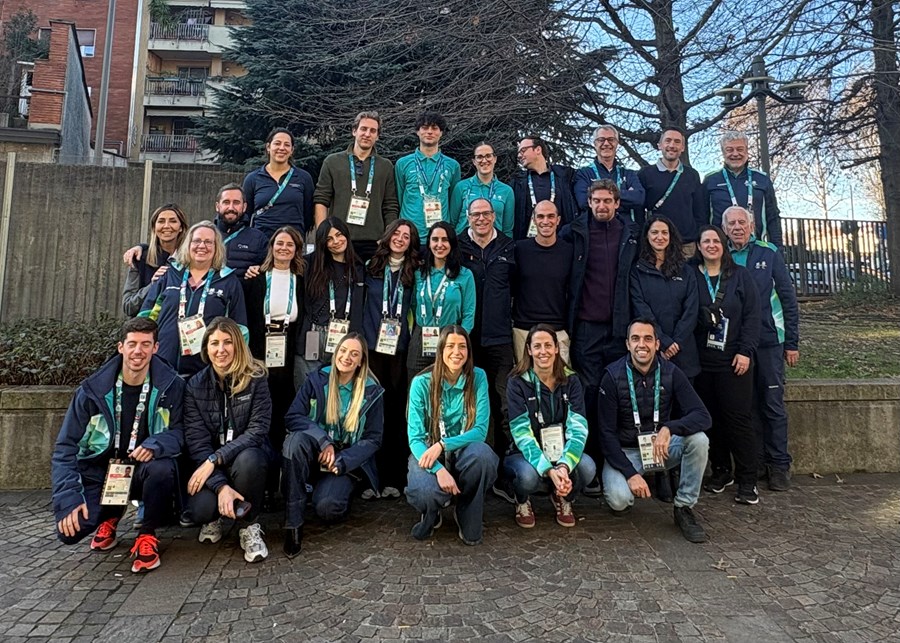
Members of the ITA on-site delegation in Milano together with colleagues from NADO Italia and Milano Cortina 2026.
At the time of publication, no anti-doping rule violations (ADRVs) have been asserted based on samples collected during the Milano Cortina 2026 testing program. All samples collected during the Games have been analysed by the World Anti-Doping Agency (WADA)-accredited anti-doping laboratory in Rome, in accordance with the World Anti-Doping Code and International Standards. All samples collected during Milano Cortina 2026 will be stored in the ITA’s Centralised Long-Term Storage Facility for a period of up to ten years. The ITA may select samples for re-analysis in the future should advances in analytical methods allow the detection of substances or methods that could not be identified through the initial analysis in Rome.
The ITA was present in Italy with a team of 20 anti-doping experts overseeing the delivery of its clean sport program across the Milano Cortina 2026 venues. The program was implemented in close cooperation with the Milano Cortina 2026 Organising Committee and NADO Italia, supported by NADO experts, international Doping Control Officers and blood collection personnel, as well as hundreds of chaperones responsible for athlete notification. The ITA also closely collaborated with the Italian authorities and the WADA Independent Observer team on site.
The operational delivery of the anti-doping program relied on the ITA’s established digital ecosystem supporting major event programs, including platforms facilitating coordination with all anti-doping actors and delegations. Introduced for the Olympic program during the Tokyo 2020 Olympic Games and continuously refined since, this digital architecture continues to strengthen the efficiency, security and collaboration required to deliver anti-doping operations at the scale of the Olympic Games.
Following the successful delivery of the Milano Cortina 2026 anti-doping program, the ITA will continue its work to strengthen the Olympic anti-doping program and looks ahead to the Youth Olympic Games Dakar 2026 and the Olympic Games Los Angeles 2028, where it will once again implement comprehensive and intelligence-led clean sport measures.


