 Back
Back
3 February 2026
The Milano Cortina 2026 pre-Games program forms an integral part of the comprehensive anti-doping strategy for the Olympic Winter Games, which also includes Games-time testing as well as the long-term storage and potential re-analysis of samples after the event. The pre-Games phase aims to ensure that athletes are subject to a strategic and risk-based testing approach well before the start of the Games, regardless of where they train or are based.
During this preparatory period, which started in August 2025, it remained the shared responsibility of the respective International Olympic Winter Federations (IFs) and National Anti-Doping Organisations (NADOs) to implement robust testing programs for athletes preparing to participate in the Games. The ITA’s pre-Games program provided an additional layer of independent coordination, strategic support and monitoring, with the objective of reinforcing global testing efforts and reducing the risk of testing gaps.
As part of this approach, all disciplines were classified into defined risk categories, each of them linked to a minimum level of recommended testing. The recommendations combined quantitative and qualitative components and relied on data analysis frameworks and risk factors developed by the ITA over successive editions of the Olympic Games. The implementation of the targeted recommendations issued to IFs and NADOs since August 2025 was monitored throughout the past six months. In parallel, the ITA also contributed its operational expertise in winter sports through its year-round anti-doping programs for the International Bobsleigh and Skeleton Federation, the International Luge Federation, the International Ski Mountaineering Federation and the International Skating Union. For these federations, the ITA implemented the relevant pre-Games testing recommendations directly.
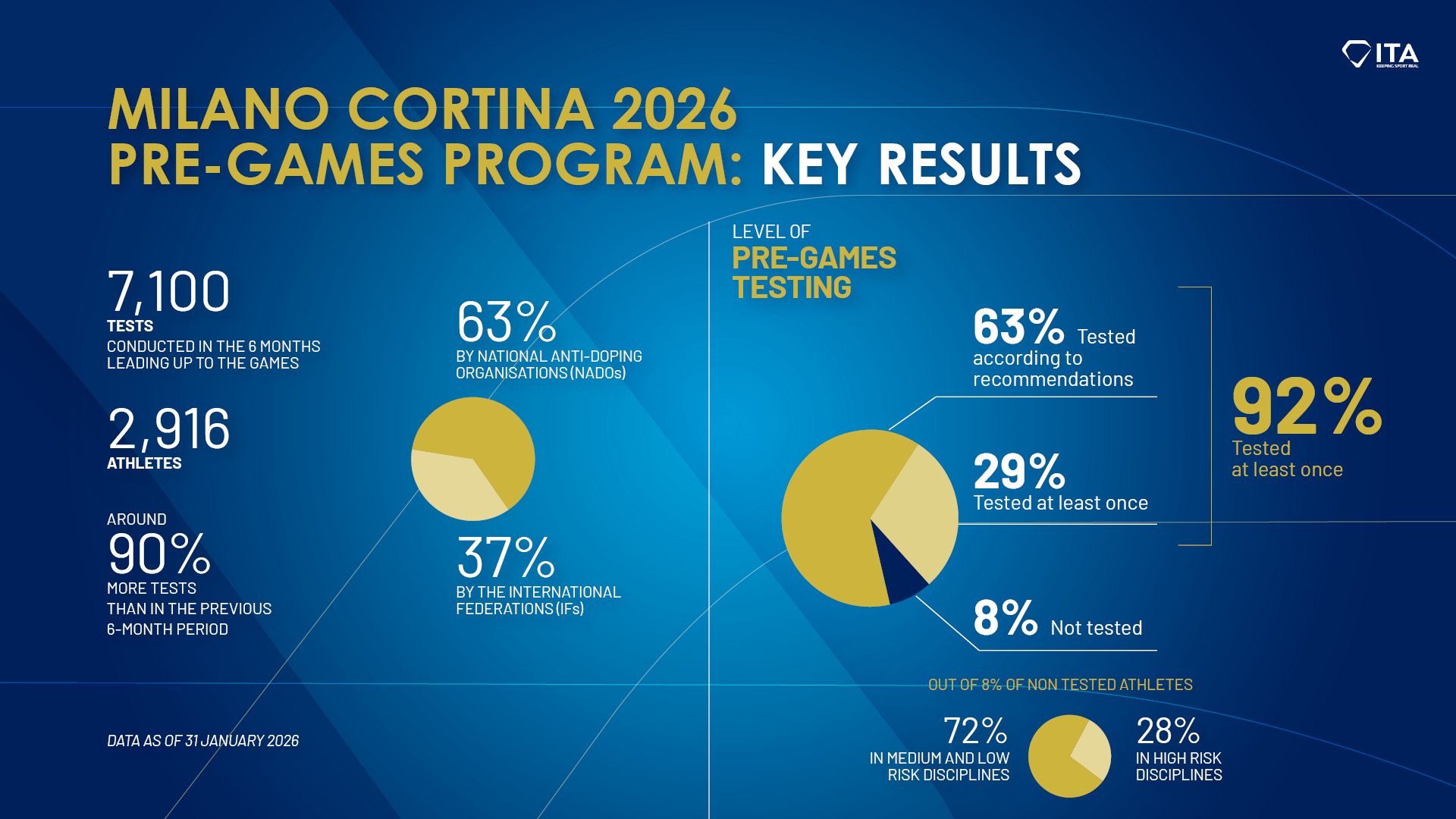
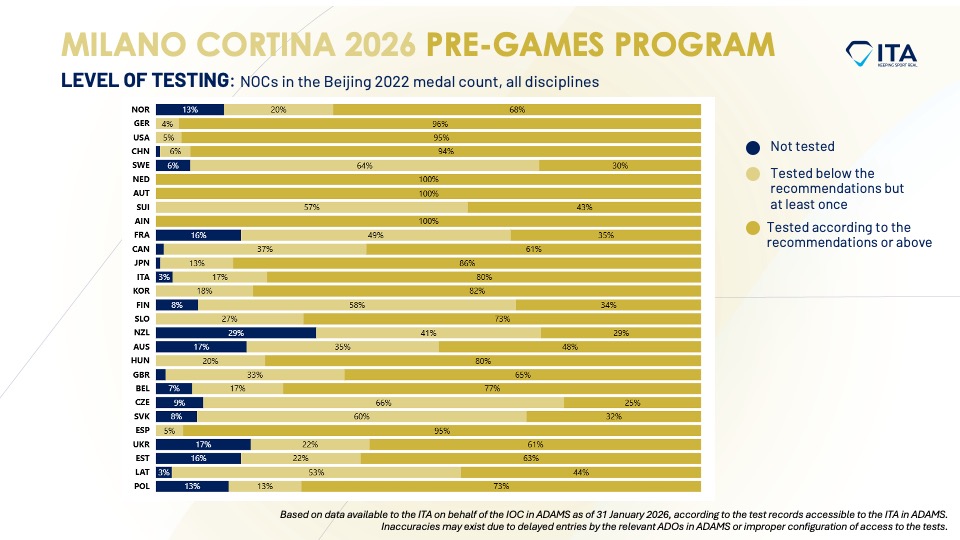
With the pre-Games phase concluding upon the opening of the Olympic Villages on 30 January 2026, the results demonstrate a high level of engagement across the global anti-doping community. Overall, the preliminary testing numbers show that at least 92% of athletes were tested a minimum of one time during the pre-Games period, through more than 7,100 doping controls conducted on over 2,900 athletes shortlisted for the event. This represents a testing increase of around 90% compared with the previous six-month period on the same athlete population. These results are in line with the outcomes of the pre-Games program for Beijing 2022, which at the time represented the most comprehensive pre-Games testing program ever implemented for an Olympic Winter Games.
Please note that the above statistics pertain to preliminary results of the ITA Milano Cortina 2026 pre-Games program.
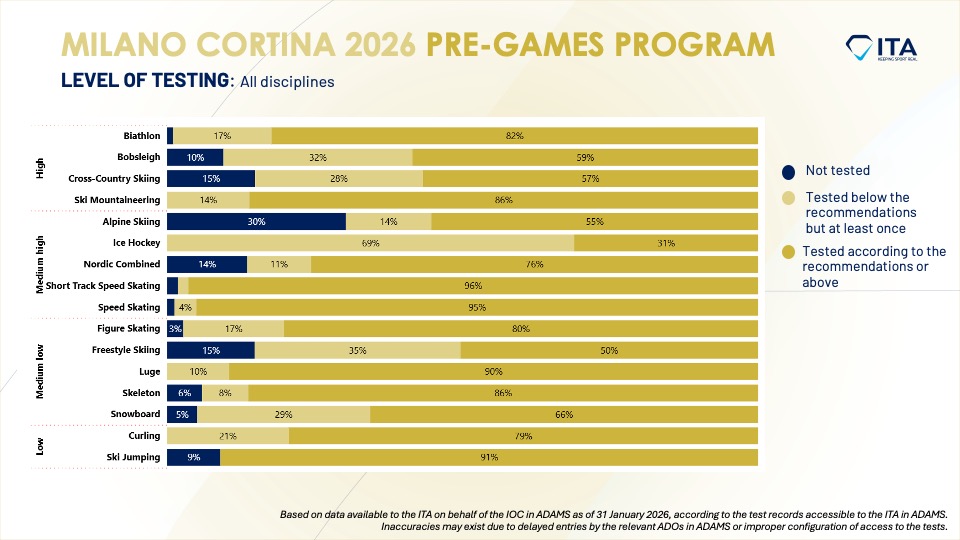
A particular focus was placed on high-risk sports and disciplines. Among this group of athletes, 91% were tested at least once during the pre-Games period and 66% three times or more. Of the 8% not tested athletes, 28% belong to high-risk disciplines. Careful attention will be placed on these athletes by the ITA during the Games.
These outcomes reflect the commitment of NADOs and IFs, who respectively implemented 63% and 37% of the pre-Games doping controls, to the common objective of protecting athletes and safeguarding the integrity of the Olympic Winter Games. The project also identified some testing gaps where a number of actors did not fully implement the testing recommendations. As pre-Games datasets are being finalised, the ITA will publish a detailed report after the Olympic Winter Games Milano Cortina 2026. Conclusions from this report will be used to further enhance future pre-Games programs.
“Pre-Games testing is one of the most decisive phases in protecting clean sport at major event,” said Benjamin Cohen, ITA Director General. “It is during this period that targeted testing can have the greatest impact. For Milano Cortina 2026, the ITA is proud to have been able to support global anti-doping efforts by applying consistent testing standards in the lead-up to the Games, to reduce the risk that athletes are placed at a disadvantage through gaps in the system. The strong level of implementation achieved by National Anti-Doping Organisations and International Olympic Winter Federations reflects their shared commitment to fair play and clean sport. These collective efforts are intended to give athletes confidence that robust and coordinated testing measures are in place ahead of the Games. At the same time, the project has identified further areas for improvement that must be addressed in order to continue strengthening the effectiveness of pre-Games testing and to further raise standards for athletes who expect fair and clean competitions.”


